
Longji Rice Terraces
Rice calendar
Tap a month to see how the terraces look. Dates are typical and change a little from year to year and field to field.
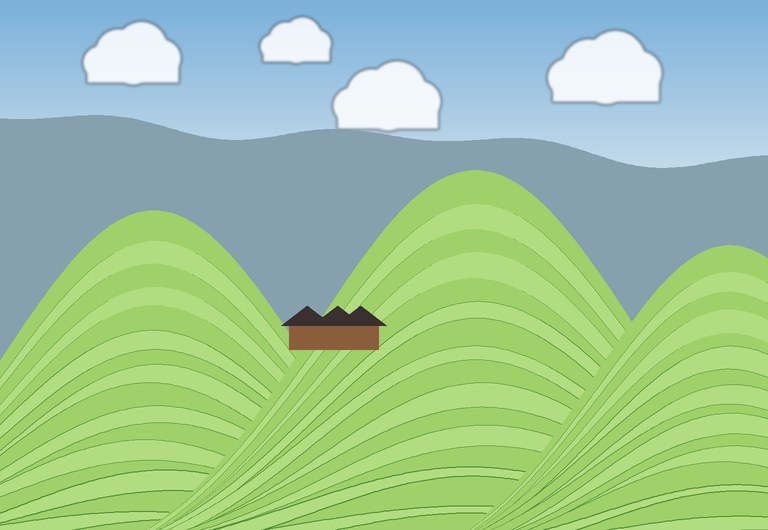
About 100 kilometres from Guilin, in Longsheng County of Guangxi, the Longji Rice Terraces wind around the mountains from the valley to the ridge tops. The name means “Dragon’s Backbone”: the terraces look like the scales of a dragon, and the summit ridge like its spine.
Six and a half centuries of work
Most of the terraces were built about 650 years ago, and farmers have maintained them ever since. They lie mostly between 600 and 800 metres above sea level. The area is home to Zhuang and Yao villages, with wooden houses built on the steep slopes.
Four seasons, four landscapes
Longji changes completely through the year. In spring the terraces are filled with water. In summer they are covered with green rice. In autumn the ripe rice turns them gold. In winter frost can cover the fields. Use the rice calendar above to see each stage.

Visiting tips
- Paths between the villages are made of stone steps. Wear comfortable shoes and pack light.
- Viewpoints near the villages are best in the early morning or late afternoon.
- Porters can carry luggage up from the car park if you stay overnight.
Key facts
| Location | Longsheng, near Guilin, Guangxi, China |
| Name | “Dragon’s Backbone” |
| Built | Mostly about 650 years ago |
| Altitude | Mostly 600–800 m |
| Local peoples | Zhuang and Yao |